October 12, 2026/
Learn how to interpret tarot cards together with this beginner-friendly guide. Discover card combinations, patterns, and simple ways to understand...
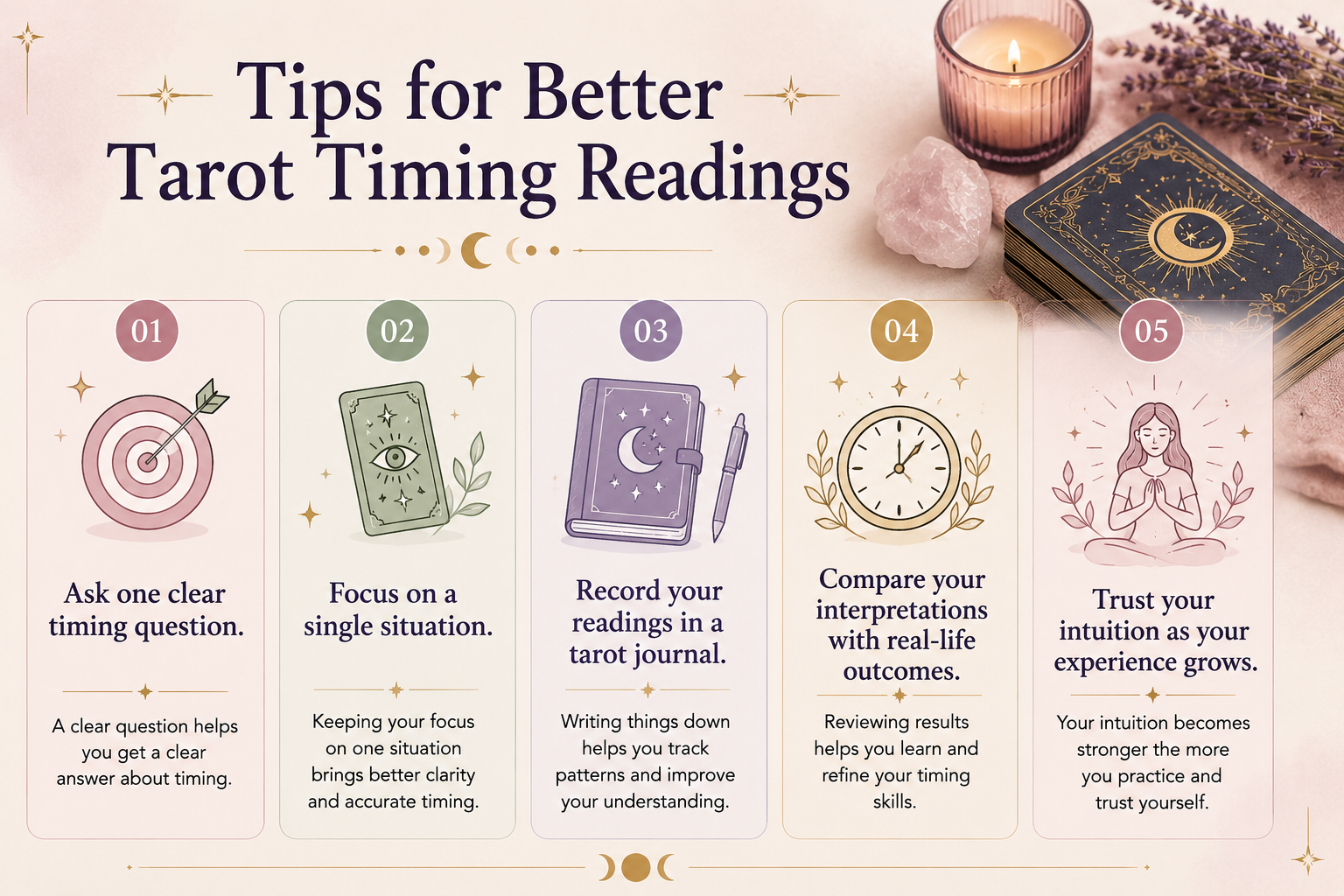
Tarot timing is a technique some readers use to explore when an event or situation may unfold. While tarot is best known for offering guidance and insight, many people also use it to gain a general sense of timing.
It’s important to remember that tarot does not predict exact dates. Instead, it can suggest possible timeframes based on the cards, your intuition, and the context of the reading.
Tarot timing is the practice of connecting tarot cards with different periods of time, such as days, weeks, months, or seasons.
For example, if you ask:
The cards may offer clues about the likely timing.
| Card Group | Common Timing |
|---|---|
| Wands | Days or Spring |
| Cups | Weeks or Summer |
| Swords | Months or Autumn |
| Pentacles | Longer-term or Winter |
| Major Arcana | Significant life events or divine timing |
These are general associations rather than fixed rules.
The number on a card can also provide hints.
For example, the Three of Wands might suggest three days, three weeks, or three months based on the situation.
The surrounding cards are just as important as the timing card.
For example:
Always interpret timing alongside the full reading rather than relying on one card alone.
Learning tarot timing takes patience and practice. Over time, you’ll begin to notice patterns that make sense in your own readings. Use tarot timing as a helpful guide rather than a fixed prediction, and allow both the cards and your intuition to work together.
With regular practice, you’ll become more confident in understanding not only what the cards are saying—but also when their messages may begin to unfold.
Learn how to interpret tarot cards together with this beginner-friendly guide. Discover card combinations, patterns, and simple ways to understand...
Discover the connection between witchcraft and tarot, how tarot cards can support spiritual reflection, and simple ways to build a...
Seven of Wands as How Someone Sees You The Seven of Wands suggests that someone sees you as strong, determined,...
Six of Wands as How Someone Sees You The Six of Wands suggests that someone sees you as confident, successful,...
Five of Wands as How Someone Sees You The Five of Wands suggests that someone may see you as strong-willed,...
Four of Wands as How Someone Sees You The Four of Wands suggests that someone sees you as warm, positive,...